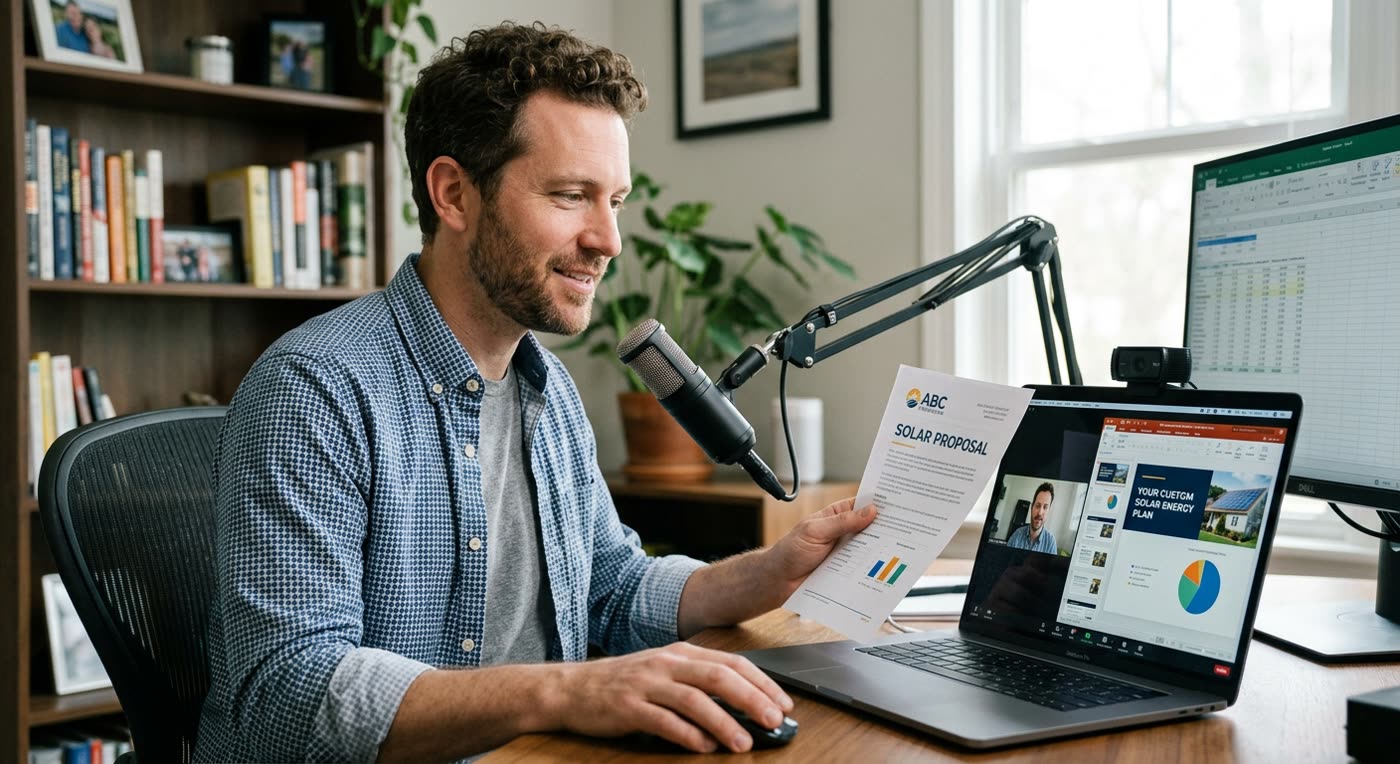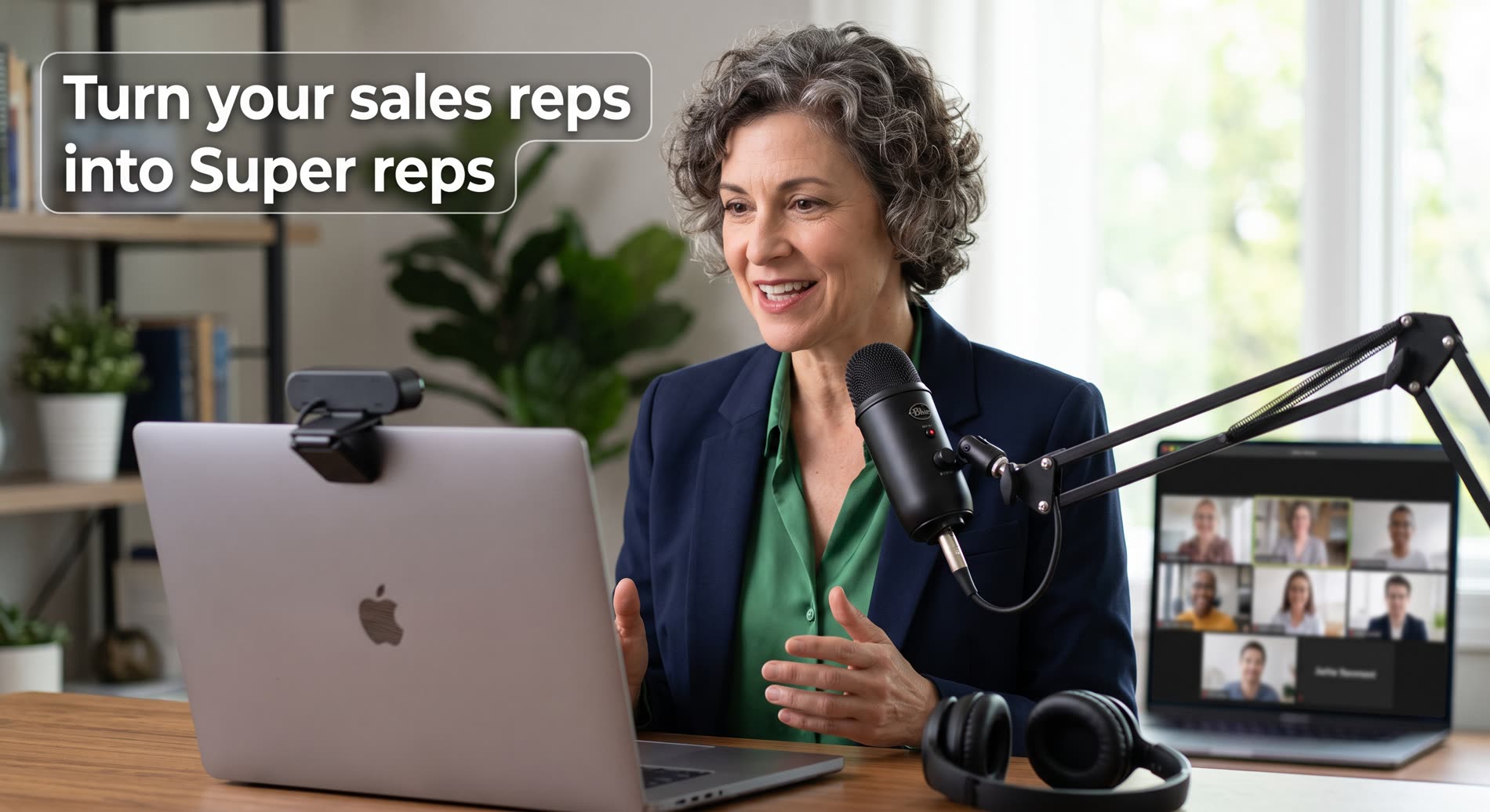
The industry, 2024 to now

Disrupt the Market

Thirteen chapters on what happened to residential solar, and what is still standing. Watch it before you read anything else on this page.

2 min 58 sec13 chaptersSound available

Question 01

How many proposals are open right now?

You can get that number. It takes a minute in the CRM.

Question 02

Which one is about to sign?

Harder. You have a feeling about two of them, and the feeling has been wrong before.

Question 03

How would you know?

That is the one. A PDF gives nothing back. No opens, no time on page, no idea which number stopped them.

The answer

Know who is ready before you call.

Send a recorded walkthrough of their roof, their usage and their numbers. Then watch who opened it, how far they got, and what they played again.

Scroll

  • 01How many proposals are open right now?
  • 02Which one is about to sign?
  • 03How would you know?

Know who is ready before you call.

Send a recorded walkthrough of their roof, their usage and their numbers. Then watch who opened it, how far they got, and what they played again.

The conditions

Door knocking built this industry. Here is what changed.

Nobody sold a $40,000 system in 2019 the way they will sell one in 2027. The porch got harder, the PDF stopped getting opened, and the homeowner started doing their research before you ever showed up. The method did not fail. The conditions moved.

01

The 30 percent credit expired.

Section 25D ended for residential systems installed after December 31, 2025. The price objection you used to answer with a tax credit now has to be answered by you, out loud, in the homeowner's own numbers.

02

Acquisition got expensive.

Knock crews, marketplace fees and lead resellers all cost more than they did in 2022. You know your own cost per acquisition better than I do, and you know which direction it moved.

03

They decide after you leave.

They read the guides, they collect three quotes, and they sit with it for a week or two. The kitchen table stopped being the place where a $40,000 decision actually gets made.

The idea for 2027

Every quote in that pile is a PDF.

A PDF cannot tell you anything.

Send the presentation, not the paperwork.

That is the whole thing. Nobody in your market is sending it, and the tracking that comes back turns your Monday morning call list into an order of operations. The rest of this page is how it is done, what is built with you, and how you will know it worked.


The 2027 pipeline

Three ways to put a proposal in front of a homeowner.

Here is what each one actually costs you.

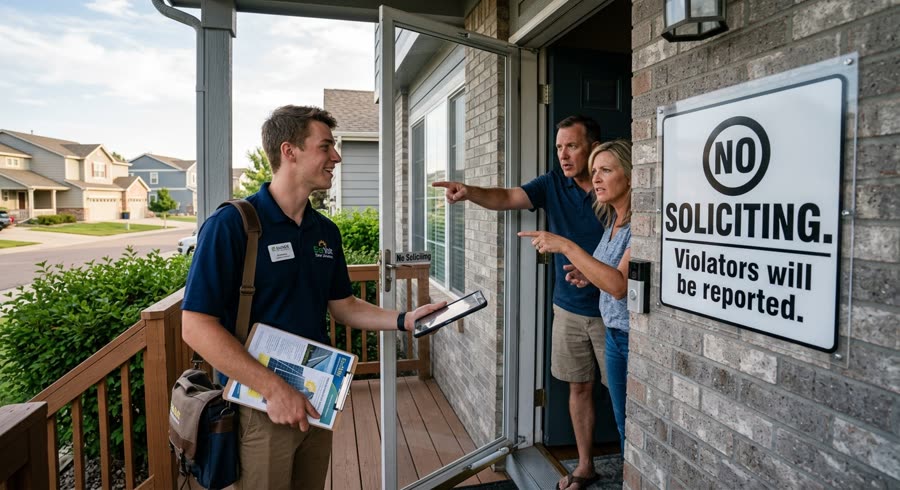
A rep at a front door beside a no soliciting sign

Front end grind

The Door Knock

Built the industry · 2015 to present

The approach

Reps walk territory and open cold with a scripted pitch, hoping to earn a sit-down before the door closes.

What the homeowner feels

Interrupted and guarded. They are deciding whether to trust you before you have finished a sentence, and most of that decision is not about your product.

What it costs you

High rep turnover, expensive territory saturation, and a cost per acquisition that climbs every season.
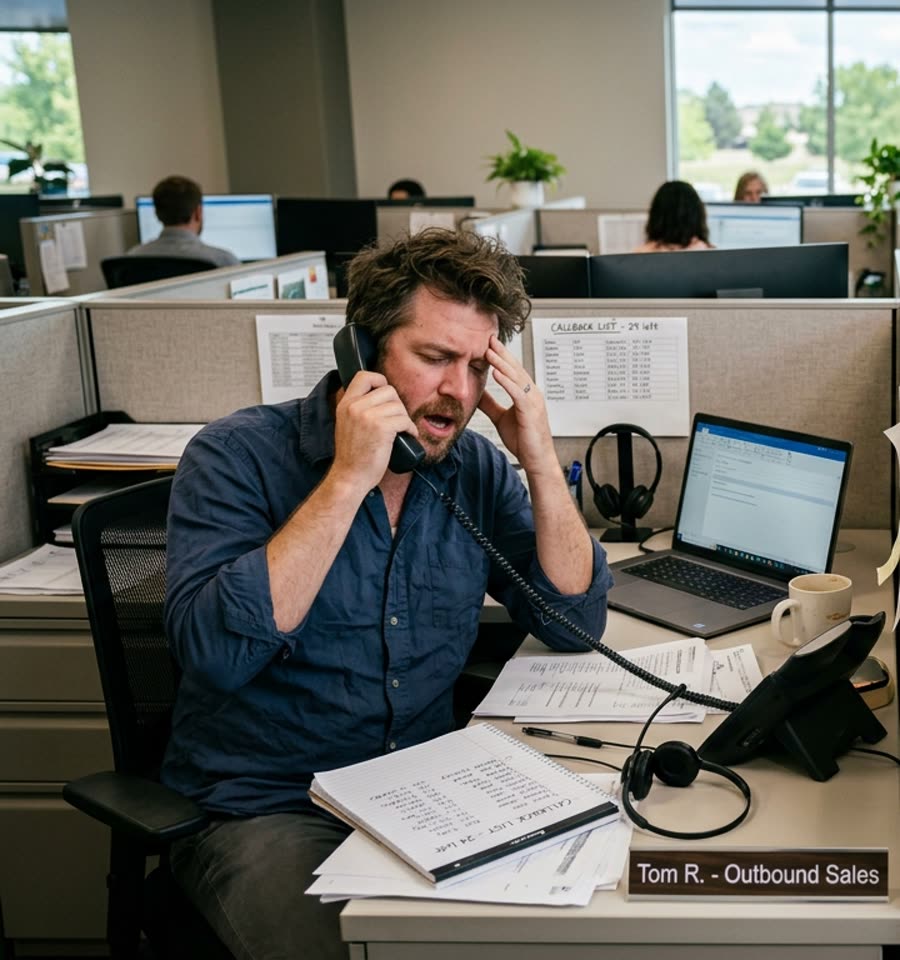
A rep working a callback list on the phone

Back end chase

The Dump & Dial

Still standard · 2021 to present

The approach

Email a 14-page technical proposal, then chase it with calls and texts until they answer or go quiet.

What the homeowner feels

Buried. They open a document full of kilowatt-hours and offset percentages, do not want to admit they are lost, and stop replying.

What it costs you

Reps burning hours on leads that already went cold, and margin given away as discounts to restart a stalled conversation.

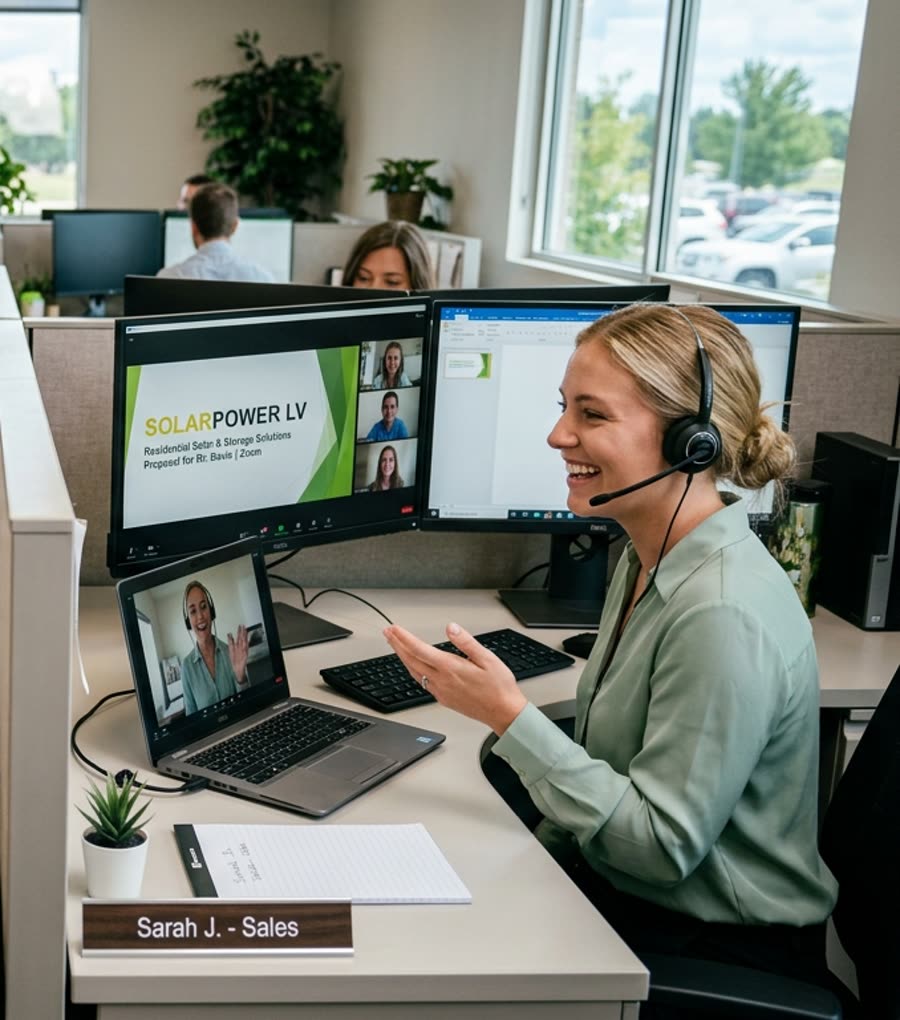
A rep walking a homeowner through a proposal on screen

The method

The Proposal Room

Built for 2027

The approach

A recorded walkthrough of their roof, their usage and their numbers, sent to their inbox and watched on their couch on their schedule. Every view is tracked, so you know who is ready before you pick up the phone.

Tracked

What the homeowner feels

In control. They pause, rewind, pull in a spouse, and come back with real questions instead of an excuse to get off the phone.

What it costs you

One rep's afternoon instead of a canvassing crew. It is the system I ran as the single salesperson behind $2.5M+ in solar and storage.

What comes back

One evening, played back.

This is the part a PDF cannot do. Hold the button and watch one evening at #4417 in Phoenix, the top row of the board at the top of this page.

Viewer activity · #4417 · Phoenix, AZ 7:00 PM

Four events, one evening. Ghosted until the clock reaches them.

7:12 PMProposal opened
7:24 PMWatched 11:42 of 14:03
9:03 PMStorage section replayed 3 times
9:06 PMClicked Schedule a Zoom

The clock runs from 7:00 to 9:30 PM. What she did in those two and a half hours is the whole pitch.

Your rep opens Monday knowing this homeowner watched the battery section three times. That is not a cold call anymore. That is a conversation with a known question.

Any tool can hand you that timeline. Knowing what to do with it on Monday morning is the part we train.

Press and hold, or hold the space bar, to play a recorded evening of viewer activity.


The case study

$2.5M in a year. One salesperson. No knocking.

A rep recording a walkthrough of a homeowner solar proposal
One rep, one afternoon, and the proposals already sitting in the pipeline.
Salespeople
1
Install crews
1
Owners
2
Award
Enphase Platinum, 2022

March 2020, my sales team went to zero. There was no door to knock on and no kitchen table to sit at. So I recorded myself walking each homeowner through their own proposal. Their roof. Their usage. Their actual numbers. Then I sent it to their inbox instead of a PDF.

Two years later I was the only salesperson at a company that went from under a million dollars a year to more than two and a half. Two owners, one install crew, and me. In 2022 the manufacturer handed me the Enphase Platinum Installer award in person.

I am not going to tell you door knocking is dead. It built this industry. I am going to tell you what happened when I stopped.

2.5xAt least. Revenue in one year, same company, same market, one salesperson.

Beforeunder $1M a year
After, same headcount$2.5M+ a year

Where this goes next. That was one company, one operator, one market, and your market is not mine. So I am not handing you that number as a promise. I am going to write your baseline down in week zero, build the same system on your pipeline, and show you the movement in your own numbers before the quarter is out. That is how a company grows on purpose instead of on a good season.

What came back

The homeowners had opinions.

These are the replies to walkthroughs I recorded. Not one of them is about a panel brand, a warranty, or a price. They are all about finally understanding the thing they were being asked to buy.

★★★★★

Best video overview ever.

Homeowner

★★★★★

I have never seen a proposal done this way before.

Homeowner

★★★★★

Completely blown away.

Homeowner

★★★★★

I stopped it and had my wife watch the video proposal. She watched it five times. We are ready to sign the contract.

Homeowner

Why it works

A homeowner can rewatch a video. Nobody rereads a PDF.

Watching someone explain your own roof is not the same as reading a spec sheet. The replay counts are the proof, and they come back to you by name.

★★★★★

No pressure. I could watch the video on my own time, at my convenience.

Homeowner

★★★★★

Brian, this truly made my investment worth it. I know more now about what I am buying and how my system works.

Homeowner

★★★★★

Truly the best way to market and sell. Sign me up.

Solar company owner

Run your own number

Same hours, four to ten times the reach.

A sit-down proposal costs a rep most of an afternoon. A recorded walkthrough costs them the length of the walkthrough. The gap is the whole argument.

Run the numbers
Her quotes · 4 matches
Installer A $29,850 400W panels · 25 year warranty · 4.6 stars
Installer B $31,400 425W panels · 25 year warranty · 4.8 stars
Installer C $33,100 430W panels · 30 year warranty · 4.7 stars
You $32,200 425W panels · 25 year warranty · 4.9 stars Walkthrough of her roof · 14:03

Marketplace leads

If your leads come from EnergySage, this matters more, not less.

Open the homeowner's side of a marketplace and your quote is sitting in a row with three others. She can compare price, panel brand, warranty length and a star rating. Every axis she can see is a number, so the lowest number wins by default.

The walkthrough adds the one axis nobody else sent. A person who explained her roof.

I ran this on marketplace leads and on leads we sourced ourselves. The marketplace lead is the one it helps most, because that is the buyer doing the most comparing. The two minute intro video and the email campaigns inside the program are written for exactly these lists.

There is also a book. The EnergySage Playbook is this argument at full length — 117 pages on response time, the walkthrough structure, the financing menu after the credit expired, and a 90-day rollout. $99, or take the free two minute audit first and find out whether you need it.

The program

How to Win in 2027

Four weeks with your owner and your sales team. Your pipeline, your proposals, your numbers. Not a seminar and not a video library you never open. One solar company per state.

Week 01 2 days · 2 hours a day

The Digital Studio & Data Playbook

Your baseline written down before anything changes, then the studio built and wired into the CRM you already run.

  1. Sales baseline & data mining
  2. The digital studio setup
  3. CRM integration & campaign mapping
  4. Action, execution & practice

Week 02 2 days · 2 hours a day

The Super Rep Protocol

Where a rep stops sending videos and starts reading them. Scoring, telemetry, and the dead leads worth waking up.

  1. Peer review & hardware calibration
  2. AI lead scoring & pipeline architecture
  3. Telemetry, alerts & analytics
  4. Dead lead revival & partnership building
  5. The video-integrated CRM campaign workshop
  6. Pre-launch clearance

Week 03

Execution & Automation

Live fire on real deals, with the follow-up running itself behind your reps instead of depending on them.

  1. The live-fire transition
  2. Digital authority
  3. The SMS quickover
  4. Drip campaign optimization
  5. The long game

Week 04

The Executive Debrief

Your numbers against your own week zero baseline, with ownership in the room, then the assets that keep working after I am gone.

  1. The executive analytics debrief
  2. Total tracking automation
  3. The urgency assets

Eighteen phases across four weeks. The outline and the agreement itself are both in the portal, free, before you talk to anyone. The session-by-session curriculum opens the day you start. Open the portal.

Built and handed over with it

The first greeting

An email campaign that introduces the homeowner to the rep they are actually going to be working with, by name and on camera, before anyone talks price.

The two minute intro

A short video built for first contact: the one that goes out to EnergySage leads and to the enquiries landing in your company inbox. Same video, both doors.

Everything tracked

Every send reports back. Who opened it, how far they watched, what they replayed, and who clicked through. Your Monday list orders itself.

Social, if you want it

Short videos for the clients who want to run them on their own channels, cut from the material you are already recording.

Two sessions a week, two hours each. Sixteen hours live with your team. Owners in the room for weeks 1 and 4. One solar company per state, held for twelve months. Plus the recordings, and the campaigns above built and running before we finish.

Book the call

Measurement

How you will know it is working.

Training that cannot be measured is a seminar. We write your numbers down before we start, then watch the leading indicators move first and the revenue follow. We compare you to you, not to somebody's industry average.

  1. 01

    Baseline

    Week 0, before we start

    • Lead to appointment rate
    • Appointment to signed rate
    • Days from first contact to signature
    • Proposals sent per one close
    • Average discount given per deal
    • Cost per acquisition, by lead source
  2. 02

    Signal

    Weeks 1 to 4

    • Open rate against the old PDF open rate
    • Average watch percentage
    • Replay rate on the pricing section
    • Click-throughs per proposal sent
    • Rep response time to a warm signal
    • Videos sent per rep, per week
  3. 03

    Movement

    Day 30 to 60

    • Close rate on video-first deals
    • Sales cycle, first contact to signed
    • Proposals per close
    • Discount given per deal
    • Ghost rate after proposal delivery
  4. 04

    Result

    Day 90 and beyond

    • Revenue per rep
    • Attach rate on storage and add-ons
    • Cost per acquisition
    • Referrals and reviews per closed job
    • Rep retention

Keyshould riseshould fallwritten down first

The arithmetic

Same hours. Four to ten times the reach.

This is not a promise about your close rate. It is a clock. A sit-down proposal costs a rep most of an afternoon once you count the drive. A recorded walkthrough costs them the length of the walkthrough. Move the sliders to your own numbers and watch the gap.

20
150 min
25 min

Drive time, parking and the reschedule are inside the first number. The second one is you, a screen and their proposal.

Sit-downs8
Recorded walkthroughs48

homeowners reached per rep, per week, in the same hours

6x the reach, no extra headcount
and no extra hours

The one that proved it. The biggest single sale I ever put together came out of a recorded walkthrough. The year that system was running, the company took EnergySage Installer of the Year.


Straight answers

The questions you are actually asking.

No. There is a piece of software involved and it is the cheap part. I will tell you exactly which one to get and how to set it up in week one. Reading what it sends back and running Monday morning off it is the part that is not for sale in a subscription.

Some will not. The four weeks are built so the first one who does gets a result the rest of the room can see. That is a much shorter argument than the one you are having now.

You do not need to. It is one rep's afternoon spent on the proposals already sitting in your pipeline, not a new channel to feed. Week one we scope it to the deals worth the recording.

Week one you will see open rates and watch time on proposals already in your pipeline. Close rate moves later, around day thirty to sixty. That is the honest order, and it is why we measure the leading indicators first.

Most companies do. Usually it is a screen recording with no structure, sent once, and nothing comes back from it. The four weeks are about the structure and the follow-up, not about learning to hit record.

Most owners do. The walkthrough is a screen recording of the homeowner's own proposal with your voice on it. Your face is optional, and when it is on it is a small circle in the corner.

The method does. The pacing changes, because a commercial buyer has a committee and a longer read, and the walkthrough has to survive being forwarded to someone who was not on any call. We adjust it on the call.

An owner who shows up, at least one rep who wants it, and access to the proposals you are already sending. That is the whole list.

That is exactly why we write your baseline down in week zero and split the comparison by lead source and season. If you cannot tell the difference afterwards, the measurement was built wrong.

Then you will know inside four weeks instead of four quarters, and you will have your own baseline numbers written down either way. Plenty of owners have never had those on paper. That is worth the time on its own.

Coach Brian, founder of The Proposal Room
Coach Brian

Who is behind this

I sold it this way before I taught it.

I started in solar in the door-to-door era, driving to houses and sitting at kitchen tables. When that stopped working I did not go looking for a better script. I changed what the homeowner got after I left.

Four years of recording walkthroughs later, I know which parts of it a sales team picks up in a week and which parts take a month. That is the whole reason the program is four weeks and not a weekend.

I do not sell solar anymore and I do not sell leads. I train the people who do, and I take a small number of companies at a time so the four weeks are actually mine to give.

EnergySage Installer of the Year 2024
Enphase Platinum Installer 2022

One call

Stop guessing which deals are alive.

Twenty minutes. I will ask what your close rate is now and what a homeowner gets from you after you send a proposal. If the answer is a PDF, I will tell you the first thing I would change, whether or not you ever buy anything.

  • No deck and no pitch script. You talk more than I do.
  • You leave with your own baseline numbers written down.
  • If the program is wrong for your size, I will say so on the call.
  • I take a small number of companies at a time, so the answer might be a date rather than a yes.

Pick a time

Thirty minutes on your calendar.

The times you see are the times I actually have. Choose one and it is booked, no back and forth.

Book the call

Opens my calendar in a new tab.

A coach running a video training session with a room of sales reps on screen

Four weeks, your pipeline, your numbers.

Book the call
Book the call